
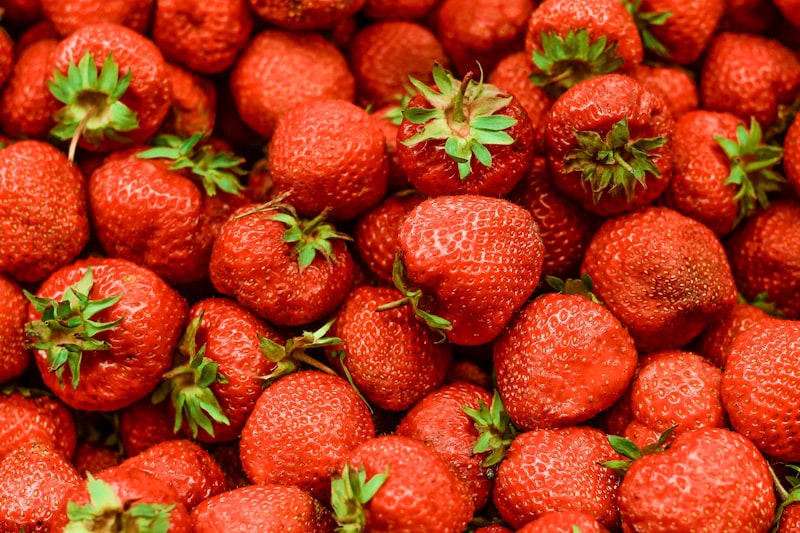
Fisetin: The Strawberry Compound That Kills Zombie Cells
Senescent "zombie cells" accumulate with age and poison their neighbors. Fisetin emerged as the most potent natural senolytic in a screen of 10 flavonoids.
Your body is full of cells that refuse to die but have stopped doing their jobs. They're called senescent cells, and they're accelerating your aging. A natural flavonoid found in strawberries might be the key to clearing them out.
Somewhere in your body right now, there are cells that have given up. They've stopped dividing. They've stopped contributing. But they haven't died. Instead, they sit there — bloated, dysfunctional, and angry — pumping out inflammatory chemicals that damage everything around them.
Scientists call them senescent cells. The longevity community calls them zombie cells. And they might be one of the most important drivers of aging we've ever discovered.
The good news? A natural compound called fisetin — found in ordinary strawberries — has emerged as one of the most promising tools for clearing these zombie cells out. In a landmark 2018 study, researchers screened ten different flavonoids and found fisetin to be the most potent senolytic of them all. It extended lifespan in aged mice even when given late in life.
Here's everything you need to know.
What Are Senescent Cells (And Why Should You Care)?
To understand fisetin, you first need to understand the problem it's solving.
Every cell in your body has a lifecycle. It's born, it divides, it performs its function, and eventually it either divides again or undergoes a controlled death called apoptosis. This is normal and healthy — old cells clear out, new cells replace them.
But sometimes things go wrong. A cell accumulates DNA damage from stress, radiation, toxins, or simple wear and tear. At this point, the cell faces a choice: it could become cancerous and keep dividing with broken DNA, or it could enter a state called senescence — essentially hitting the brakes forever.
Senescence is actually a brilliant anti-cancer mechanism. By stopping division, the damaged cell prevents itself from becoming a tumor. In young, healthy bodies, the immune system recognizes these senescent cells and clears them out efficiently. Problem solved.
But as you age, two things happen. First, you accumulate more senescent cells because more of your cells experience damage. Second, your immune system gets worse at clearing them. The result is a growing population of zombie cells that pile up in your tissues — your fat, your joints, your organs, your blood vessels.
And here's the truly destructive part: senescent cells don't just sit there quietly. They secrete a toxic cocktail of inflammatory molecules called the SASP — the Senescence-Associated Secretory Phenotype. This includes pro-inflammatory cytokines like IL-6 and IL-8, matrix metalloproteinases that degrade tissue structure, and growth factors that can actually make neighboring cells senescent too.
Think of it like a bad neighbor who not only lets their house decay but actively makes the whole neighborhood worse. The SASP drives chronic inflammation (sometimes called "inflammaging"), contributes to tissue dysfunction, and has been linked to virtually every major age-related disease: heart disease, diabetes, neurodegeneration, osteoarthritis, pulmonary fibrosis, and cancer.
Research from the Mayo Clinic, led by James Kirkland and Tamara Tchkonia, has demonstrated this dramatically. When scientists genetically engineered mice so they could selectively destroy senescent cells, the results were remarkable — the mice lived longer, had less disease, and maintained better physical function. When they transplanted senescent cells into young mice, those mice aged faster.
The message was clear: senescent cells aren't just a marker of aging. They're a cause of it.
Enter the Senolytics
If senescent cells drive aging, the obvious question is: can we kill them?
This is the field of senolytics — drugs or compounds that selectively eliminate senescent cells while leaving healthy cells alone. The concept was pioneered by Kirkland and colleagues at the Mayo Clinic, who published the first senolytic drug discovery paper in 2015. They found that the combination of dasatinib (a leukemia drug) and quercetin (a plant flavonoid) could selectively clear senescent cells in mice, improving cardiovascular function, reducing frailty, and extending healthspan.
The dasatinib + quercetin (D+Q) combination became the gold standard of senolytic research. It worked, and worked well. But there was a catch: dasatinib is a prescription chemotherapy drug. It's not something you can or should take casually. While quercetin is available as a supplement, you'd need a doctor willing to prescribe dasatinib off-label — plus accept its potential side effects, which include fluid retention, bleeding events, and immune suppression.
Researchers needed something better. Something effective, safe, natural, and accessible.
They found it in a strawberry.
Fisetin: The Most Potent Natural Senolytic
In 2018, a team led by Matthew Yousefzadeh and including Kirkland, Tchkonia, Paul Robbins, and Laura Niedernhofer published a landmark paper in EBioMedicine that changed the senolytic landscape.
The study screened ten different flavonoid polyphenols for senolytic activity against senescent mouse and human cells. The flavonoids tested included well-known compounds like quercetin, luteolin, curcumin, and others. The researchers used multiple types of senescent cells — driven by both oxidative stress and genotoxic stress — to ensure robust results.
The winner, by a clear margin, was fisetin.
Fisetin demonstrated the strongest senolytic activity of all ten flavonoids tested, outperforming even quercetin (which, remember, was already half of the gold-standard D+Q combination). But the real excitement came from the animal experiments.
When fisetin was given to progeroid mice (genetically engineered to age rapidly), it reduced senescence markers in multiple tissues. When given to naturally aged wild-type mice — the equivalent of giving it to elderly humans — the results were even more striking. Intermittent treatment with fisetin:
- Reduced senescence markers across multiple tissues
- Restored tissue homeostasis in aged organs
- Reduced age-related pathology including kidney, liver, and immune dysfunction
- Extended median and maximum lifespan — even when treatment started late in life
That last point is critical. The mice didn't receive fisetin from birth. They received it starting at the equivalent of old age — roughly 75 in human years. And it still worked. Late-life intervention was enough to produce meaningful benefits.
The researchers also tested fisetin on human adipose tissue explants (fat tissue samples from actual humans) and confirmed that it reduced senescent cell markers there too, demonstrating that the effect translates beyond mice.
The paper's conclusion was remarkably direct: "The natural product fisetin has senotherapeutic activity in mice and in human tissues. Late life intervention was sufficient to yield a potent health benefit."
Where Is Fisetin Found?
Fisetin (3,7,3′,4′-tetrahydroxyflavone) is a naturally occurring flavonoid found in various fruits and vegetables. The richest dietary sources include:
- Strawberries — by far the highest concentration (~160 µg/g)
- Apples (~26 µg/g)
- Persimmons (~10 µg/g)
- Onions (~5 µg/g)
- Grapes and cucumbers (smaller amounts)
But here's the reality check: the doses used in senolytic research are vastly higher than what you'd get from food. The mouse studies used approximately 100 mg/kg — which, when translated to a human equivalent dose, works out to roughly 500–1500 mg per day depending on body weight and the scaling method used.
To get 500 mg of fisetin from strawberries alone, you'd need to eat approximately 3 kilograms (about 7 pounds) of strawberries. Every day. During your dosing window.
Strawberries are great for you. But if you want senolytic-level fisetin, you need a supplement.
Fisetin vs. Dasatinib + Quercetin
How does fisetin stack up against the original senolytic combo? Here's the practical comparison:
Dasatinib + Quercetin (D+Q):
- More human clinical data (first senolytic to enter clinical trials)
- Dasatinib is a prescription drug — requires a physician
- Dasatinib carries meaningful side effects (fluid retention, bleeding, immunosuppression)
- Quercetin is OTC but dasatinib is the heavy hitter in the combo
- Currently the most validated senolytic in clinical research
Fisetin:
- Most potent senolytic in a head-to-head flavonoid screen
- Entirely natural — a plant flavonoid
- Available over-the-counter, no prescription needed
- Relatively inexpensive (~$20-40 for a month's supply)
- Good safety profile in preclinical studies
- Less human clinical data (trials ongoing but results still emerging)
- May have additional benefits: antioxidant, anti-inflammatory, neuroprotective
For most people interested in longevity who don't have a physician managing senolytic protocols, fisetin is the accessible option. It's the one you can actually try.
Dosage Protocols: Two Schools of Thought
The longevity community has broadly settled on two approaches to fisetin dosing. Neither has been definitively validated in large human trials, so both should be considered experimental:
1. Intermittent High-Dose ("Senolytic Dosing")
This mirrors the approach used in the mouse studies and in the clinical trial designs. The idea is based on the "hit-and-run" mechanism of senolytics — you don't need to take them daily. You deliver a high dose over a short period to trigger apoptosis in senescent cells, then stop and let your body recover.
Typical protocol:
- Dose: 20 mg/kg body weight per day (approximately 1000–1500 mg for most adults)
- Duration: 2 consecutive days per month
- Frequency: Once monthly, or once per quarter
- Method: Taken with a fat source (fisetin is lipophilic and absorbs better with dietary fat)
This is the protocol most closely aligned with the research. The Mayo Clinic's AFFIRM-LITE trial used intermittent dosing in older adults.
2. Daily Low-Dose ("Maintenance Dosing")
Some people take a lower daily dose of fisetin for its general anti-inflammatory and antioxidant properties, rather than specifically for senolytic clearance.
Typical protocol:
- Dose: 100–500 mg per day
- Duration: Ongoing
- Method: Taken with food containing fat
The rationale here is less about killing senescent cells (which may require the higher pulse dose) and more about leveraging fisetin's broader biological activities — it inhibits mTOR, activates sirtuins, reduces oxidative stress, and has neuroprotective properties in various models.
Some people combine both approaches: daily low-dose with periodic high-dose "pulses."
Bioavailability Note
One challenge with fisetin is its relatively poor bioavailability. Like many flavonoids, it's not well absorbed in the gut. Some supplement formulations use liposomal delivery or pair fisetin with absorption enhancers like galactomannan fiber (Novusetin®) to improve uptake. If you're going to take fisetin, a bioavailability-enhanced formulation is worth considering.
The Human Evidence — Honest Assessment
Here's where we need to be straight with you: the human evidence for fisetin as a senolytic is still early.
The preclinical data — mouse studies, cell culture, human tissue explants — is genuinely compelling. The Yousefzadeh 2018 paper is one of the most cited in the senolytic field. Multiple research groups have replicated fisetin's senolytic activity in various models.
But mice are not humans. What works in a mouse doesn't always translate.
Several clinical trials have been registered and conducted:
- AFFIRM (Alleviation by Fisetin of Frailty, Inflammation, and Related Measures in Older Adults) — a Mayo Clinic trial in older women (NCT03430037), examining fisetin's effect on markers of senescence and inflammation
- AFFIRM-LITE — a related trial examining intermittent fisetin dosing
- COVID-FISETIN — a trial investigating fisetin in hospitalized COVID-19 patients, where senescent cell burden was hypothesized to worsen outcomes
- Additional trials at Wake Forest, the University of Connecticut, and other institutions examining fisetin in osteoarthritis, kidney disease, and frailty
Results from these trials have begun to trickle out, but we don't yet have the large, definitive Phase III trial that would move fisetin from "promising" to "proven." Early reports suggest good tolerability and some positive biomarker changes, but the field is still young.
This is important context. Fisetin is not a proven anti-aging drug in humans. It's a highly promising natural compound with extraordinary preclinical data that is currently being tested in humans. There's a meaningful difference.
That said, its safety profile is reassuring. Fisetin has been consumed by humans in food for millennia. Supplement-dose studies have not revealed major safety concerns. For a compound in the early stages of clinical validation, the risk-benefit calculation looks favorable — especially compared to pharmaceutical senolytics.
Beyond Senolytics: Fisetin's Other Tricks
Fisetin isn't a one-trick pony. Research has identified several other potentially beneficial mechanisms:
- Anti-inflammatory: Fisetin inhibits NF-κB, a master regulator of inflammatory gene expression
- Antioxidant: It scavenges free radicals and upregulates endogenous antioxidant enzymes
- Neuroprotective: Multiple studies show fisetin protects neurons in models of Alzheimer's, Parkinson's, and stroke. It maintains glutathione levels in the brain and promotes long-term memory in animal models
- Anti-cancer: Fisetin has demonstrated anti-proliferative effects in multiple cancer cell lines
- mTOR inhibition: It partially inhibits the mTOR pathway, which is one of the most validated longevity-promoting mechanisms (rapamycin, the "gold standard" longevity drug, works primarily through mTOR inhibition)
- Sirtuin activation: Fisetin activates SIRT1, a longevity-associated deacetylase
Whether these additional mechanisms are clinically meaningful at supplement doses in humans remains to be proven. But they suggest fisetin isn't just clearing zombie cells — it may be promoting cellular health through multiple overlapping pathways.
The Bottom Line
Fisetin occupies a unique position in the longevity supplement landscape. It's the most potent natural senolytic ever identified in a head-to-head screen. It extended lifespan in mice even when given late in life. It's natural, available, affordable, and appears safe.
The science is real. The preclinical data is strong. The human trials are underway. But we're still in the early chapters of this story.
If you're interested in trying fisetin, the evidence best supports intermittent high-dose protocols (1000–1500 mg over 1–2 days, monthly or quarterly), taken with a fat source, using a bioavailability-enhanced formulation. Consult a physician, especially if you're on medications — fisetin may interact with blood thinners and certain drugs metabolized by cytochrome P450 enzymes.
The zombie cells in your body aren't going away on their own. Fisetin might be one of our best tools for dealing with them. We just need a few more years of human data to know for sure.
Sources
Yousefzadeh MJ, Zhu Y, McGowan SJ, et al. "Fisetin is a senotherapeutic that extends health and lifespan." EBioMedicine. 2018;36:18-28. doi:10.1016/j.ebiom.2018.09.015. PMID: 30279143
Zhu Y, Tchkonia T, Pirtskhalava T, et al. "The Achilles' heel of senescent cells: from transcriptome to senolytic drugs." Aging Cell. 2015;14(4):644-658. doi:10.1111/acel.12344. PMID: 25754370
Kirkland JL, Tchkonia T. "Senolytic drugs: from discovery to translation." Journal of Internal Medicine. 2020;288(5):518-536. doi:10.1111/joim.13141. PMID: 32686219
Baker DJ, Childs BG, Durik M, et al. "Naturally occurring p16Ink4a-positive cells shorten healthy lifespan." Nature. 2016;530(7589):184-189. doi:10.1038/nature16932. PMID: 26840489
Xu M, Pirtskhalava T, Farr JN, et al. "Senolytics improve physical function and increase lifespan in old age." Nature Medicine. 2018;24(8):1246-1256. doi:10.1038/s41591-018-0092-9. PMID: 29988130
Khan N, Syed DN, Ahmad N, Mukhtar H. "Fisetin: a dietary antioxidant for health promotion." Antioxidants & Redox Signaling. 2013;19(2):151-162. doi:10.1089/ars.2012.4901. PMID: 23121441
Currais A, Prior M, Dargusch R, et al. "Modulation of p25 and inflammatory pathways by fisetin maintains cognitive function in Alzheimer's disease transgenic mice." Aging Cell. 2014;13(2):379-390. doi:10.1111/acel.12185. PMID: 24341874
ClinicalTrials.gov — AFFIRM trial: NCT03430037; AFFIRM-LITE: NCT03675724; COVID-FISETIN: NCT04476953